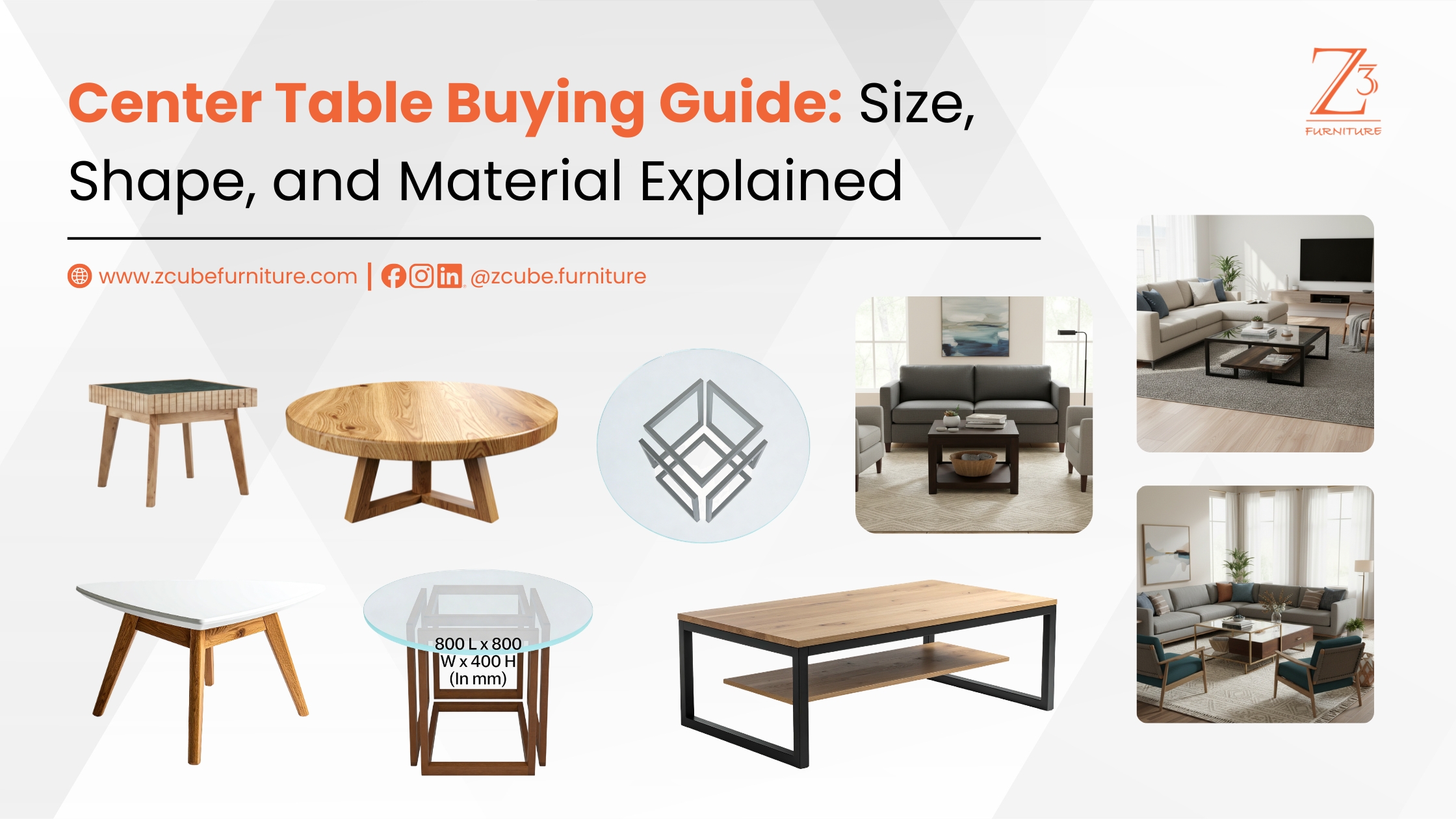
A center table is one of the most important pieces of living room furniture. Positioned at the heart of your seating arrangement, it serves both practical and decorative purposes. Whether you’re hosting guests, displaying décor items, or simply enjoying your morning coffee, the right center table can enhance the overall functionality and style of your living room.
With numerous designs, materials, and sizes available today, selecting the perfect center table can be challenging. This center table buying guide will help you understand the key factors to consider before making a purchase.
A center table helps create balance within your living room while providing a convenient surface for everyday use. It can hold decorative accessories, books, beverages, and other essentials while acting as a focal point that ties the entire seating area together.
A well-chosen center table improves the visual appeal of the room and complements your sofa and other furniture pieces.
Choosing the Right Center Table Size
Size is one of the most important factors when selecting a center table. A table that is too large can make the room feel crowded, while a table that is too small may appear disconnected from the seating arrangement.
Ideally, the center table should be around two-thirds the length of your sofa. The height should be equal to or slightly lower than the sofa seat height for comfortable access.
Maintaining a distance of approximately 14 to 18 inches between the sofa and center table allows easy movement and creates a balanced layout.
Selecting the Best Center Table Shape
The shape of your center table significantly affects both functionality and aesthetics.
Rectangular Center Tables
Rectangular center tables are among the most popular options for modern homes. They work particularly well with standard sofas and sectional seating arrangements, offering maximum surface space and a timeless appearance.
Round Center Tables
Round center tables are ideal for smaller living rooms and homes with children. Their curved edges improve movement around the room and create a softer visual appeal.
Square Center Tables
Square center tables complement symmetrical seating layouts and large living spaces. They offer a balanced look and work well in contemporary interiors.
Oval Center Tables
Oval center tables combine the practicality of rectangular designs with the elegance of curved edges. They are suitable for narrow spaces and family-friendly homes.
Understanding Different Center Table Materials
The material you choose affects durability, maintenance, and overall style.
Solid Wood Center Tables
Solid wood remains one of the most popular choices for homeowners. Materials such as Sheesham wood, teak wood, and mango wood offer exceptional durability, natural beauty, and long-term value.
Glass Center Tables
Glass center tables create an open and modern appearance. They are particularly useful in smaller spaces because they make rooms feel larger and more spacious.
Metal center tables are known for their strength and contemporary appeal. They are often paired with wood or glass tops to create stylish modern designs.
Marble Center Tables
Marble center tables add a touch of luxury and sophistication. Their premium appearance makes them an excellent choice for elegant and high-end interiors.
Consider Storage Requirements
Modern homeowners increasingly prefer center tables that offer additional storage. Options with drawers, shelves, or hidden compartments help keep living rooms organized while maximizing functionality.
Storage center tables are particularly beneficial in apartments and compact homes where space optimization is essential.
Match the Center Table with Your Interior Style
Interior Style
Recommended Center Table Features
Modern
Clean lines, neutral finishes, glass or metal accents
Marble tops, premium wood finishes, designer center tables
Choosing a center table that complements your interior style helps create a cohesive and visually appealing living room.
Common Mistakes to Avoid
Many buyers focus only on design and overlook practical considerations. Common mistakes include selecting the wrong size, ignoring room layout, prioritizing appearance over functionality, and overlooking material durability.
It is equally important to consider storage requirements and daily usage before making a final decision.
Why Solid Wood Center Tables Remain a Popular Choice
Among all materials, solid wood center tables continue to be a preferred option due to their durability, timeless appeal, and versatility. They blend seamlessly with various interior styles and offer excellent long-term value.
A premium wooden center table not only enhances the appearance of your living room but also serves as a lasting investment for years to come.
Final Thoughts
Choosing the right center table involves balancing style, functionality, and proportion. By considering size, shape, material, storage options, and interior design preferences, you can find a center table that perfectly complements your living space.
Whether you prefer a modern glass design, a luxurious marble finish, or a timeless solid wood center table, making an informed decision will help create a comfortable, stylish, and functional living room.