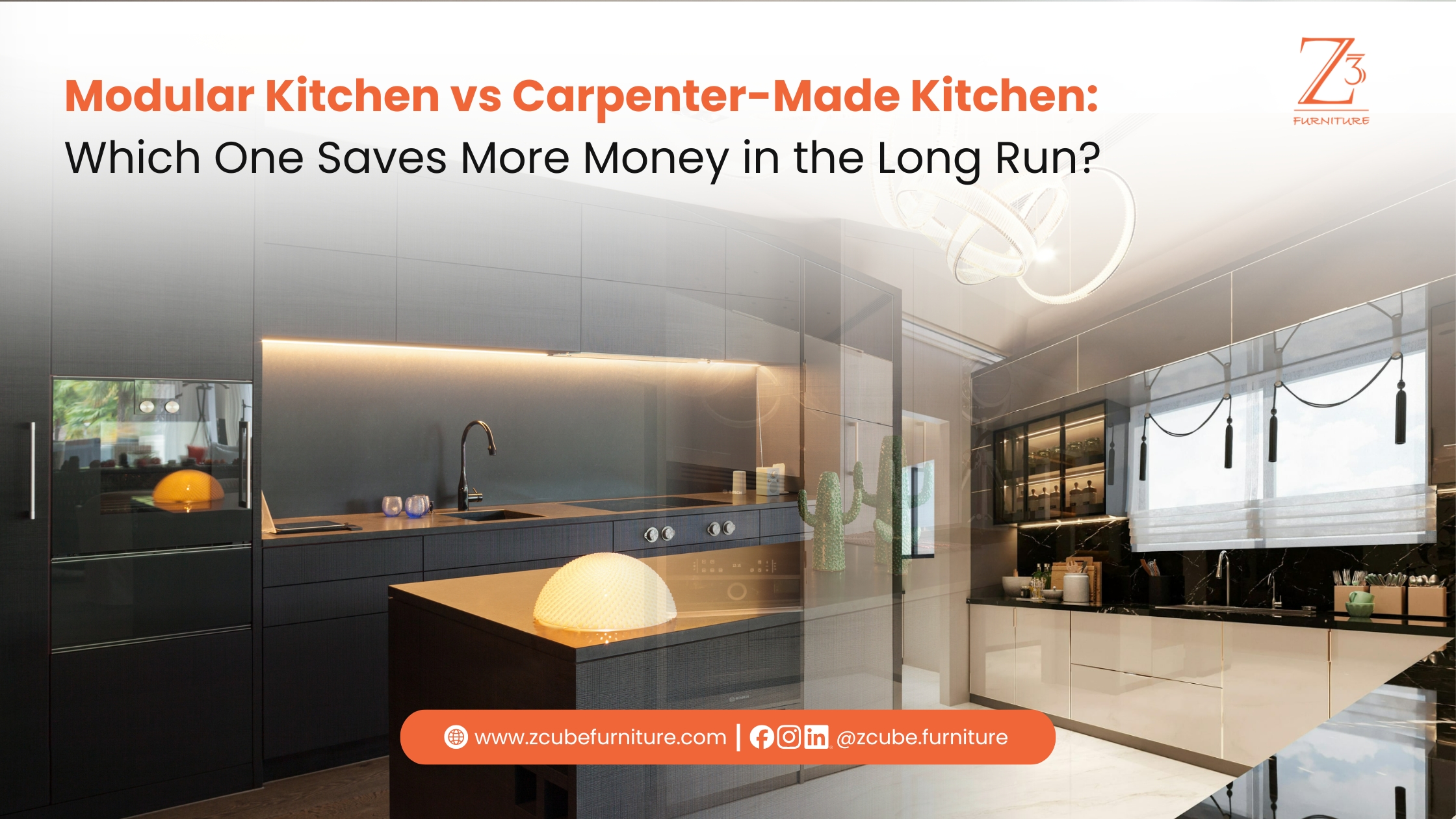
The kitchen is one of the most important spaces in any home. Whether you are building a new house or renovating an existing one, choosing the right kitchen setup can significantly impact your budget, functionality, and long-term satisfaction.
Many homeowners find themselves comparing a modular kitchen vs carpenter-made kitchen before making a final decision. While both options have their advantages, the real question is: Which one offers better value for money over the years?
In this detailed guide, we’ll compare both options based on cost, durability, maintenance, installation time, customization, and long-term savings to help you make an informed investment.
What Is a Modular Kitchen?
A modular kitchen is a modern kitchen system manufactured in a factory using pre-designed modules or units. These units are assembled at your home and can be customized according to your available space and storage requirements.
Modular kitchens are designed with precision, ensuring consistency in quality, finish, and functionality.
Key Features of Modular Kitchens
- Factory-manufactured components
- Modern and stylish designs
- Quick installation
- Efficient space utilization
- Easy maintenance and replacement
- Wide range of finishes and accessories
What Is a Carpenter-Made Kitchen?
A carpenter-made kitchen is built entirely on-site by local carpenters using raw materials such as plywood, laminates, hardware, and other components purchased separately.
This traditional method allows homeowners to create a completely customized kitchen based on their specific requirements.
Key Features of Carpenter-Made Kitchens
- Built from scratch on-site
- Flexible design customization
- Dependent on carpenter skill level
- Longer execution time
- Material sourcing handled separately
- Quality may vary
Modular Kitchen vs Carpenter-Made Kitchen: Cost Comparison
One of the biggest factors influencing a homeowner’s decision is budget.
Initial Cost
At first glance, a carpenter-made kitchen often appears cheaper because homeowners can choose materials according to their budget.
However, the final cost can increase due to:
- Labor charges
- Material wastage
- Additional hardware expenses
- Site modifications
- Unexpected delays
Modular kitchens may have a slightly higher upfront cost, but pricing is generally transparent and includes manufacturing, hardware, installation, and finishing.
Winner: Modular Kitchen
Although the initial investment may be higher, modular kitchens offer better cost predictability and fewer hidden expenses.
Durability and Longevity
When evaluating long-term savings, durability plays a major role.
Modular Kitchen
Modern modular kitchens are manufactured using advanced machinery and high-quality materials such as:
- HDHMR Boards
- Marine Plywood
- Moisture-Resistant MDF
- Premium Hardware Systems
Factory-controlled production ensures precision and consistency.
Carpenter-Made Kitchen
The lifespan of a carpenter-made kitchen largely depends on:
- Carpenter expertise
- Material quality
- Site conditions
- Finishing techniques
Inconsistent workmanship can lead to alignment issues, uneven finishes, and premature wear.
Winner: Modular Kitchen
The superior manufacturing process generally results in a longer-lasting kitchen with fewer repair requirements.
Installation Time Comparison
Time is often an overlooked cost factor.
Modular Kitchen
A modular kitchen can typically be installed within a few days after manufacturing.
Benefits include:
- Minimal disruption
- Faster project completion
- Reduced labor costs
Carpenter-Made Kitchen
A carpenter-made kitchen can take several weeks to complete because everything is constructed on-site.
Potential challenges include:
- Delays in material procurement
- Labor availability issues
- Weather-related interruptions
Winner: Modular Kitchen
Faster installation saves both time and money.
Storage Efficiency and Space Utilization
Modern homeowners expect maximum functionality from every square foot.
Modular Kitchen
Modular kitchens are designed using advanced planning techniques and smart storage solutions such as:
- Tandem drawers
- Pull-out units
- Corner storage systems
- Tall pantry units
- Built-in organizers
Carpenter-Made Kitchen
While customization is possible, achieving the same level of storage optimization often depends on the carpenter’s experience and available hardware.
Winner: Modular Kitchen
Better storage efficiency translates into a more organized and functional kitchen.
Maintenance and Repair Costs
A kitchen is exposed to moisture, heat, grease, and daily wear. Maintenance costs can add up over time.
Modular Kitchen
One of the biggest advantages is easy replacement.
If a cabinet door or drawer gets damaged:
- Individual modules can be replaced
- Repairs are quicker
- Matching finishes are easier to source
Carpenter-Made Kitchen
Repairs may require:
- Custom fabrication
- On-site modifications
- Difficulty matching old finishes
These factors often increase maintenance costs.
Winner: Modular Kitchen
Lower maintenance expenses make it a more economical long-term investment.
Design and Customization
Many homeowners believe carpenter-made kitchens offer greater flexibility.
Carpenter-Made Kitchen Advantages
- Fully customized dimensions
- Flexible design modifications
- Suitable for unusual layouts
Modular Kitchen Advantages
Modern modular kitchens now offer:
- Custom layouts
- Multiple finish options
- Personalized storage solutions
- Premium accessories
Winner: Tie
Both options offer customization, though modular kitchens have significantly closed the gap in recent years.
Quality Control and Finish
A kitchen’s appearance contributes to your home’s overall value.
Modular Kitchen
Factory production ensures:
- Uniform finishing
- Accurate measurements
- Precision edge banding
- Professional aesthetics
Carpenter-Made Kitchen
The final appearance depends heavily on individual craftsmanship.
Results can vary significantly.
Winner: Modular Kitchen
Consistent quality and finish improve both appearance and resale value.
Long-Term Cost Analysis
Let’s look at the bigger picture.
Modular Kitchen
Over a period of 10–15 years, homeowners typically benefit from:
- Reduced maintenance costs
- Better durability
- Improved storage efficiency
- Faster installation
- Higher resale appeal
Carpenter-Made Kitchen
Although initial costs may be lower, expenses can increase through:
- Frequent repairs
- Material deterioration
- Hardware replacements
- Renovation requirements
Winner: Modular Kitchen
The total cost of ownership is often lower despite the higher upfront investment.
Which Kitchen Is Best for Modern Indian Homes?
If your priorities include:
- Long-term savings
- Modern aesthetics
- Smart storage
- Faster installation
- Low maintenance
A modular kitchen is generally the better choice.
However, if you require highly customized solutions for a unique layout and have access to an exceptionally skilled carpenter, a carpenter-made kitchen can still be a viable option.
Final Verdict
When comparing Modular Kitchen vs Carpenter-Made Kitchen, the decision should not be based solely on the initial price.
A modular kitchen may require a slightly higher investment at the beginning, but its durability, efficient storage, premium finish, easy maintenance, and reduced repair costs make it the smarter financial decision in the long run.
For homeowners seeking a balance of style, functionality, and long-term value, a modular kitchen remains one of the best investments for modern living.